Open-source case study
Personal website
My own site: a software reference and a home for my long cycling trips, built AI native and open source.
Astro · TypeScript · Tailwind CSS · Leaflet · Vitest · Cloudflare Workers · Cloudflare R2 · GitHub Pages
Two reasons to build it
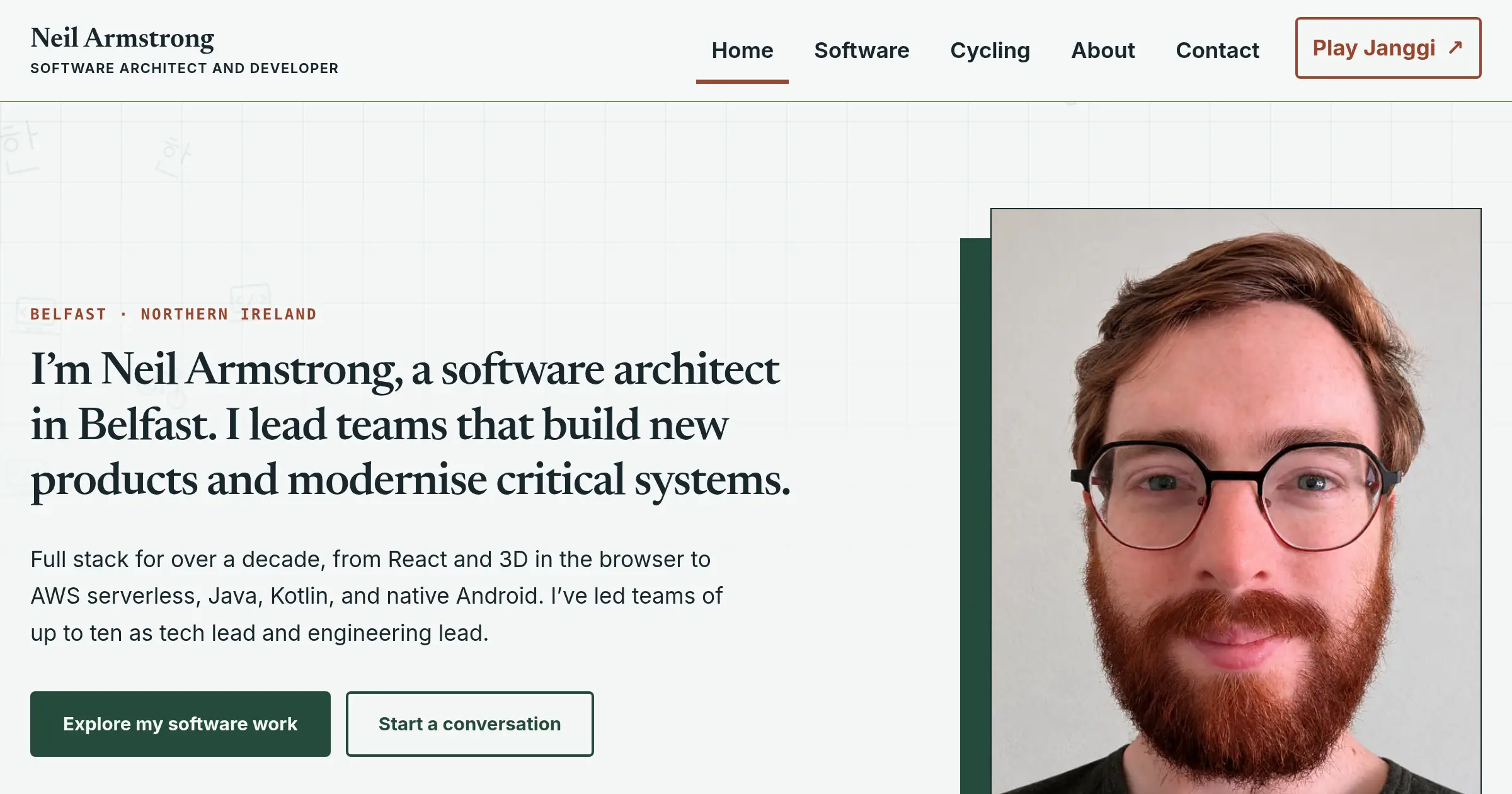
This is my own website, and it has two jobs. The first is to be a reference for me as a software engineer, showing my experience and what I can do. The second is to show the other side of me, an avid cyclist. The cycling section holds my long solo trips, written up more personally and much more freeform than anything in the software pages.
Static, but not only static
The site is static Astro, built once and served from GitHub Pages. It still does more than a pile of pages. Each trip pulls its figures from Strava at build time and shows them in metric and imperial. The ride maps are Leaflet and OpenStreetMap, and they only load when you open a ride log and scroll to the map. Without JavaScript you still get every ride name, distance and photograph.
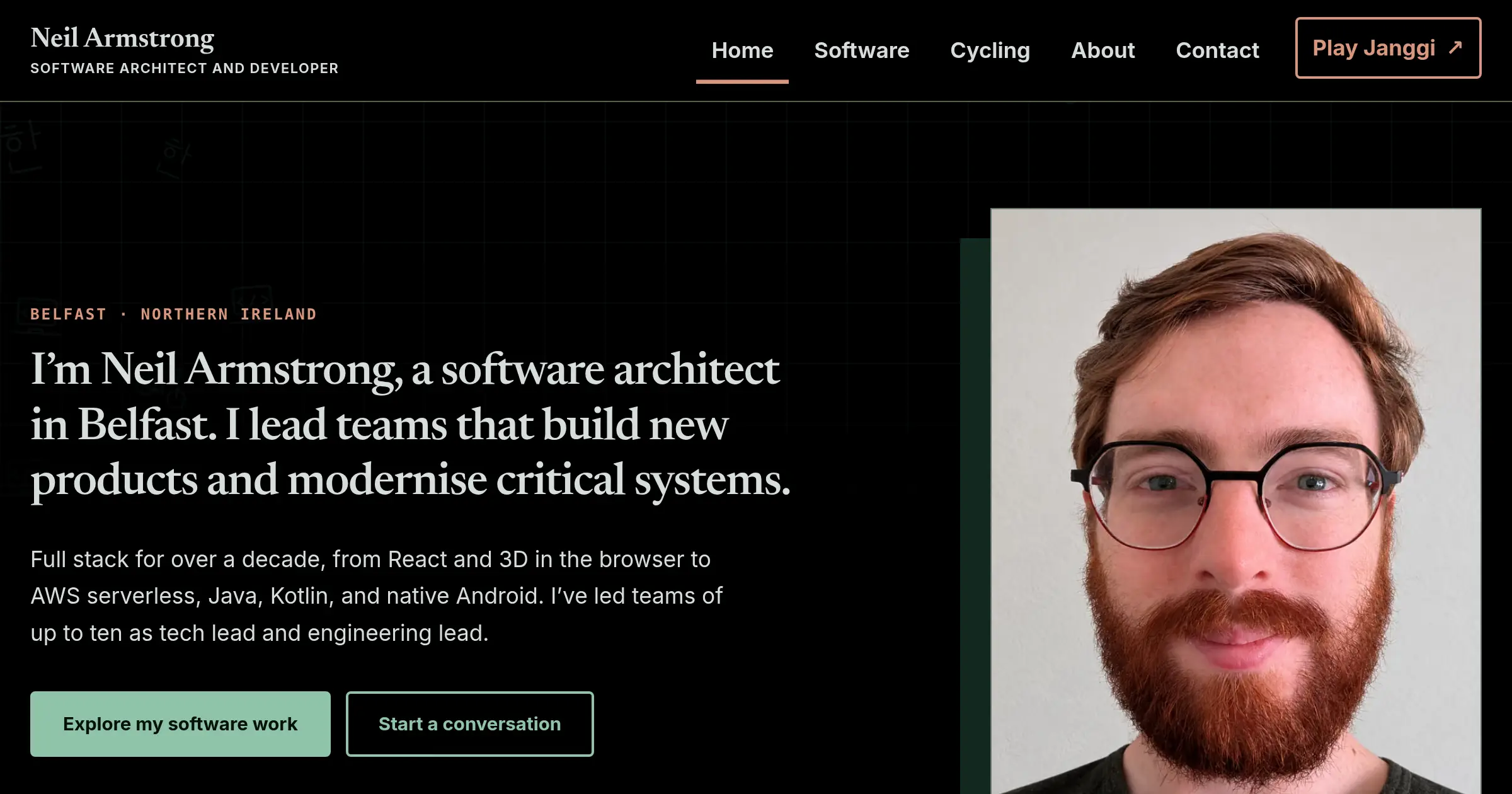
A dark mode I can read
I rarely use dark mode, because it usually tires my eyes. So I built one I’d actually use. The page background is true black, #000000, so an OLED screen can switch those pixels off and save energy. The colours come from the same palette as the light theme, and I settled on ones that work for me.
The principles from my other projects
It takes the principles from my other projects, Janggi most of all. Strict TypeScript. Lint that fails the build if a file imports something it shouldn’t. Files that live next to the one thing that uses them. I left out acceptance-test-driven development. For a website it would be overkill.
Testing is Vitest for the logic that is worth testing on its own, like unit conversion, sorting, URL building and structured data. After the build, a validation step checks the generated pages for broken links, duplicate titles and missing SEO basics. I also use AI tools to check design claims directly in the browser, such as whether a page really fits a phone.
AI native, in my own voice
I wanted to iterate quickly without the site sliding into a voice that isn’t mine. So the repository is built for AI coding agents. AGENTS.md files describe the structure, the styling and the tone, including a list of phrases that make writing sound machine-made.
Adding content works like this. I paste in a rough first-person draft. The agent checks it against the evidence, such as my Strava data or the code, and asks me questions. Then it writes two versions and I pick one. The result keeps my sentences, my jokes and a consistent style, and a new page or feature is quick to add. I review and commit everything. This case study went through the same process.
Cloudflare for what GitHub can’t do
Trip videos were the problem. With them in the repository it grew to around 850MB, close to the 1GB GitHub repository limit. The first git push took a long time as a result. That wasn’t sustainable. The clips now live in a Cloudflare R2 bucket and play from media.neilarmstrong.dev, meaning the repository is now about 100MB. pnpm dev plays local copies so I can still iterate and review new posts quickly, and the production build checks that every clip exists on the media origin as a gated check.
The contact form runs on a Cloudflare Worker, so my email address never appears on the page or in the repository. It’s a Worker secret. The Worker checks a Turnstile token, a hidden honeypot field and field length limits before it sends anything through Email Routing. Those checks are essential for a form on the open web. The Worker deploys by itself, but only when its own source changes.
Open source means easy hosting
I used the same simple approach as Janggi. Cloudflare holds the domain and GitHub Pages hosts the site. Every pull request runs the full build. A push to main also deploys and then tells IndexNow, so search engines hear about new pages quickly.
Findable by people and by AI
I put a lot of effort into SEO and AI indexing. Pages carry structured data for me, for the FAQ, for each project and for breadcrumbs. llms.txt and the sitemaps are generated from the content, so they can’t drift from it. Lighthouse runs against the built site and the targets are 95 for SEO, accessibility and best practices, and 90 for performance.
I’m fighting an uphill battle, because my name is Neil Armstrong. Still, searching for “Neil Armstrong Belfast” already puts this site first or second, alongside my LinkedIn profile. Though that is currently from my own manual searches, so treat it as an observation for now rather than a strict measurement!
Open source, with some rights kept
I like building in the open, so the code is on GitHub under the MIT licence. My writing and photography aren’t covered by that licence. I keep the copyright on those, and CONTENT-LICENSE.md says so. You’re welcome to learn from the code, just please don’t reuse my trips or my photos without reaching out first!
If you want to see where the cycling side goes, start with my personal favourite trip: Tokyo to Seoul. For the engineering side of how I run a team through a messy migration, there’s a platform modernisation.
More open-source case studies

Janggi
A local-first Korean chess app with optional sync and invite-only online play, built as much to show how I engineer software as to be played.
React 19 · Redux Toolkit · TypeScript · Tailwind CSS 4 · Vite · Cloudflare Workers · Cloudflare D1 · Durable Objects · Playwright · Fairy-Stockfish (WebAssembly)
TQCC
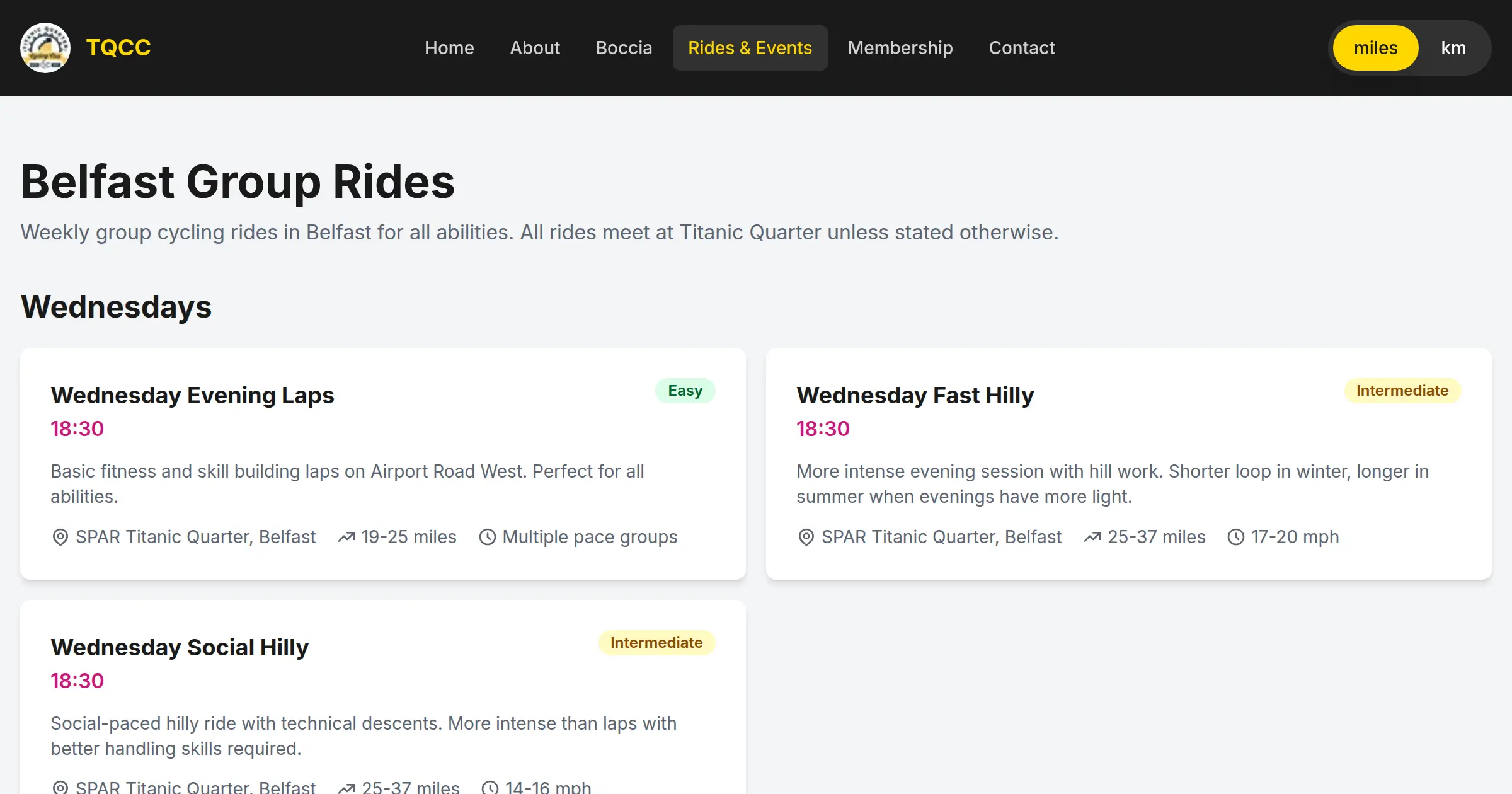
A fast, accessible site for a Belfast cycling club, with content that non-technical editors can maintain.
Astro · Tailwind CSS · TypeScript · Markdown content collections · Sveltia CMS · GitHub Pages
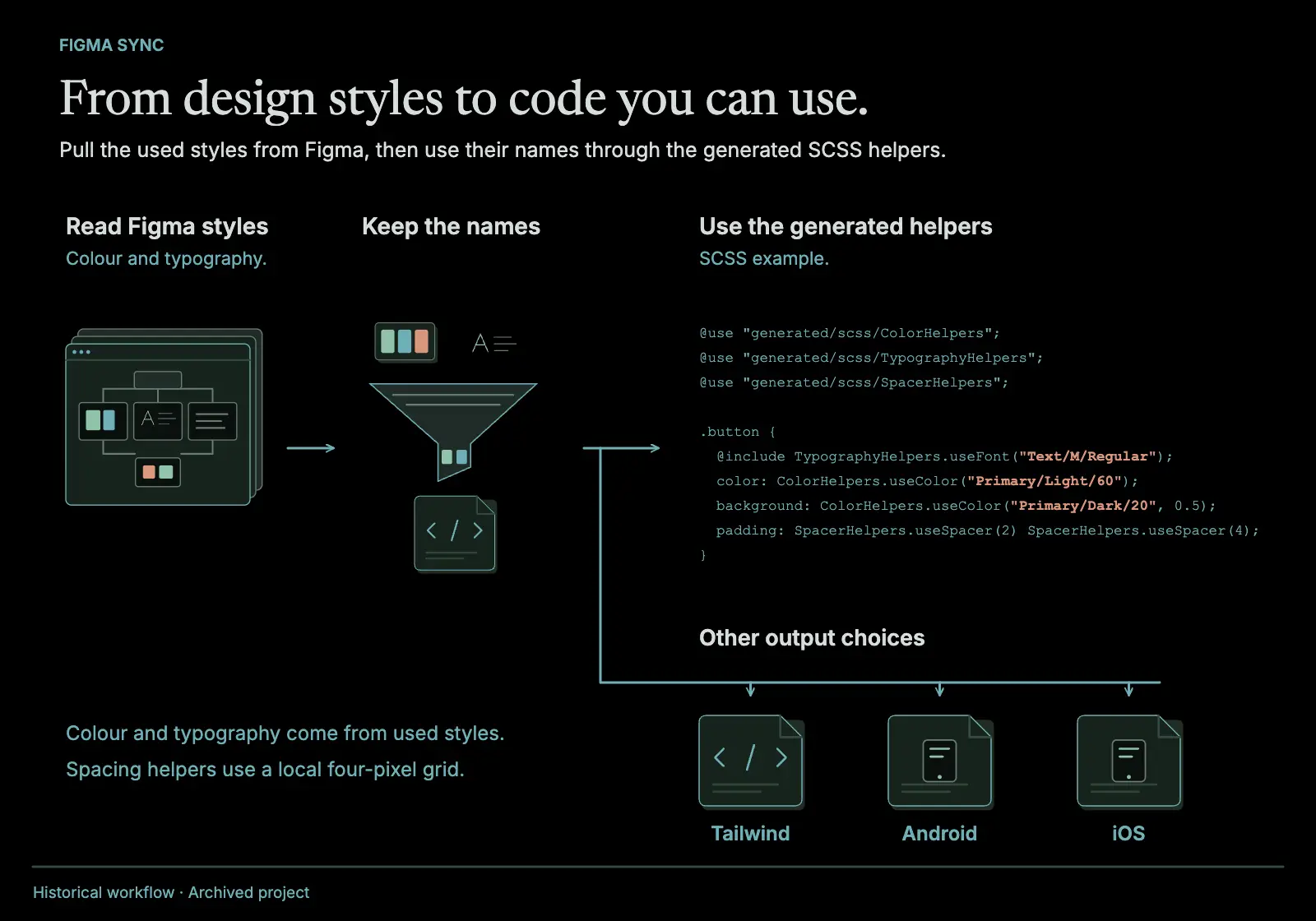
Figma Sync
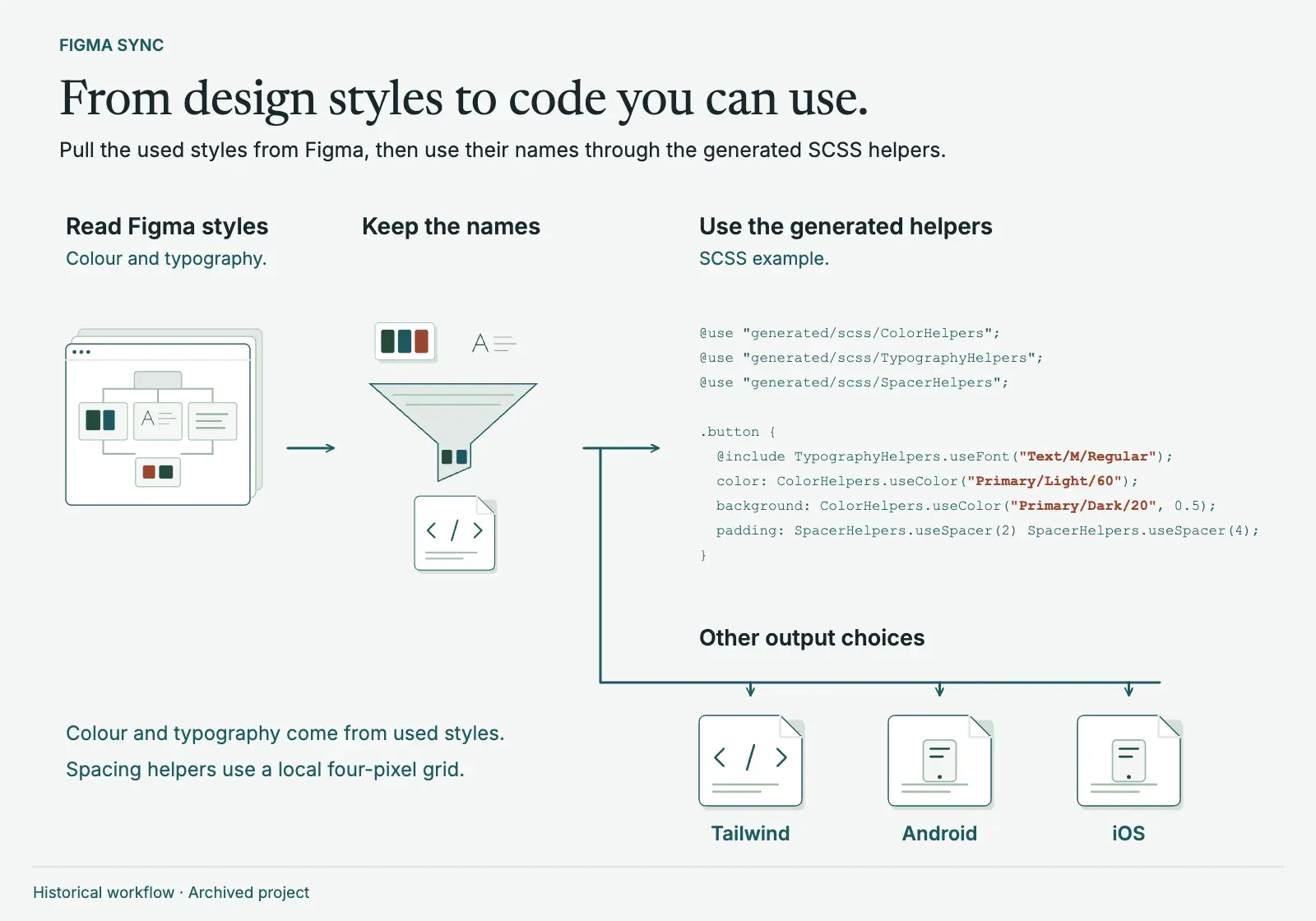
A tool I built to pull design tokens from the Figma API, so engineers use the same names as the designers. How it worked, how Code Connect compares, and what has changed since.
TypeScript · Figma REST API · Style Dictionary · SCSS · Tailwind CSS · Jest